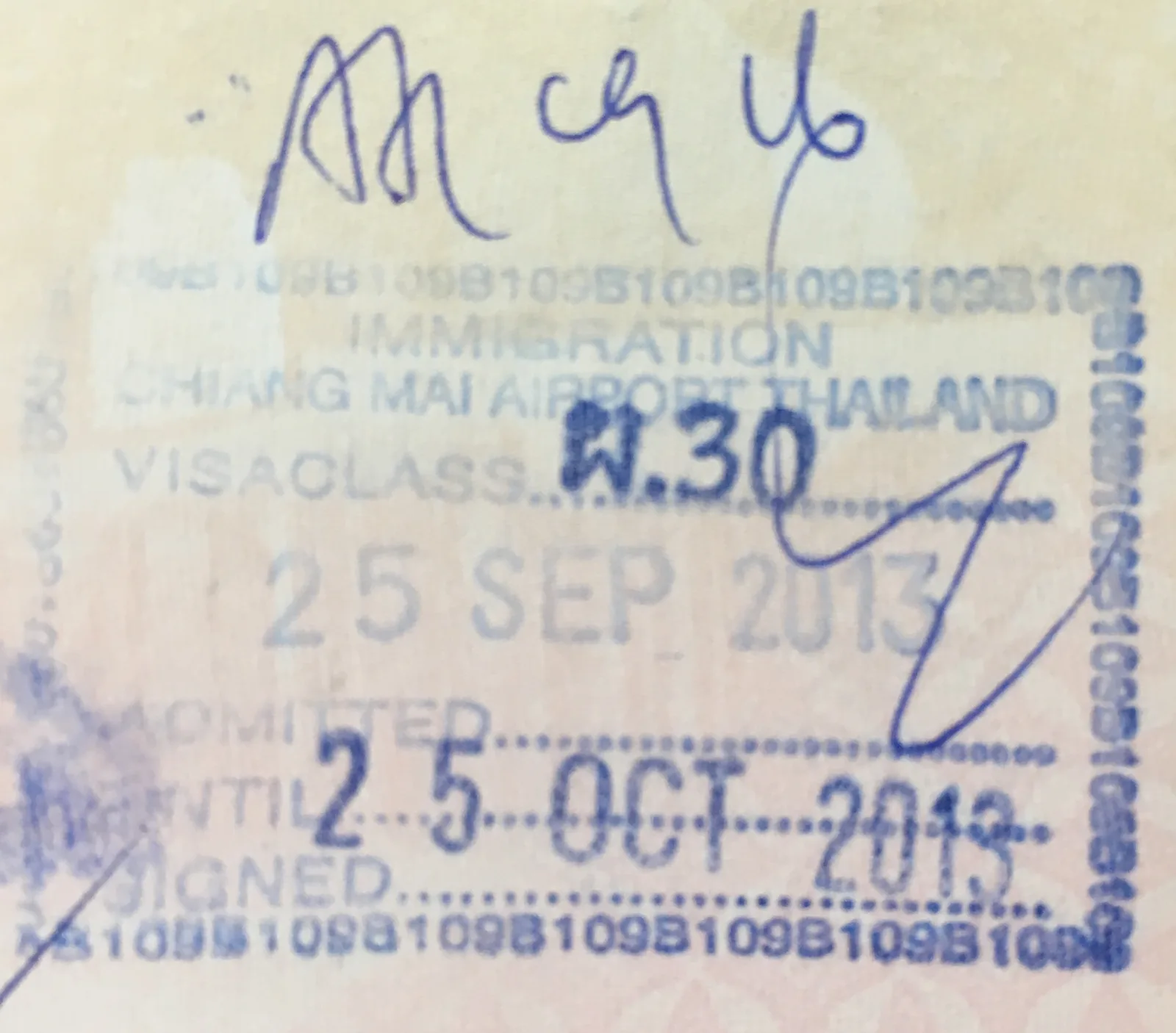
Thailand's Immigration Bureau has ordered a nationwide crackdown on foreigners who have overstayed their permitted stay. On 20 October 2026, The Nation reported that Immigration Bureau commissioner Pol Lt Gen Nopasin Poolsawat had ordered the operation and put the number of overstayers at more than 10,000. Reports describe this as the estimated number of people officers have been told to find, not an arrest total. At the same time, the shorter 30-day visa exemption has pushed more people into immigration offices for extensions, and in Phuket one branch office has closed. Here is what has happened, what overstaying costs, and how to make sure it never happens to you.
Last reviewed: 27 October 2026. Checked against Immigration Bureau, Royal Thai Embassy, PRD and published reports.
What happened
- 19 October 2026: Thai immigration officers and South Korean police arrested eight South Korean and two Chinese nationals in raids at three locations in Bangkok over an alleged scam network targeting victims in South Korea. According to The Nation, the investigation began after a South Korean national was arrested for overstaying on 4 September. The Immigration Bureau revoked the visas of all ten suspects.
- Nationwide order: after the raids, Pol Lt Gen Nopasin ordered a nationwide crackdown on foreign visitors overstaying their permitted stay, putting the total at more than 10,000. He said Thailand welcomes foreign tourists but will not let the country be used as a base for transnational crime.
- Hotel and accommodation records: in a separate case on Koh Samui on 16 October, immigration police arrested five foreign women for overstays of up to 799 days after checking hotel registration records. Section 38 of the Immigration Act requires hotel owners and landlords to report foreign guests, and a Surat Thani immigration spokesperson said strict use of these records is helping officers trace overstayers.
For people who keep their paperwork in order, nothing about the rules has changed. What has changed is enforcement: checks are more frequent and officers are using accommodation and immigration data to find people whose stay has expired.
What overstaying costs
According to Royal Thai Embassy guidance and the Ministry of Interior's Order 1/2558 (in force since 20 March 2016):
- Fine: 500 baht per day of overstay, up to a maximum of 20,000 baht.
- Short overstays, paid on departure: if you pay the fine and leave, the Royal Thai Embassy in Washington says you should not have a problem returning later. Repeated overstays, however, can lead to your passport being stamped as a violation of Thai immigration law.
Re-entry bans if you surrender to the authorities (counted from the departure date):
| Overstay | Ban |
|---|---|
| More than 90 days | 1 year |
| More than 1 year | 3 years |
| More than 3 years | 5 years |
| More than 5 years | 10 years |
Re-entry bans if you are arrested and prosecuted:
| Overstay | Ban |
|---|---|
| Less than 1 year | 5 years |
| More than 1 year | 10 years |
The difference matters. During a crackdown, someone with a long overstay who is caught faces a far longer ban than someone who goes to the authorities first. If you can't pay the fine, the embassy also warns you may be held until funds are arranged.
Why the 30-day exemption makes this more relevant
Since 15 September 2026, eligible visitors from 60 countries and territories get 30 days on entry under the visa exemption, instead of the previous 60 days. People who entered before 15 September keep the stay shown on their entry stamp. A shorter stay means less room for error: a trip that would have fitted comfortably into the old 60 days now needs an extension or a different visa.
Phuket Immigration has said that the main office now handles people applying for extensions under the new 30-day rule alongside people who entered under the old 60-day allowance. Under the revised rules, eligible travellers can apply for an extension of up to another 30 days, subject to an immigration officer's approval.
Phuket: Blue Tree office closed
If you are in Phuket, note that the Blue Tree immigration branch closed indefinitely on 19 October 2026. Phuket Immigration Superintendent Pol Col Khemchat Wattananapakasem said this was mainly because of staff shortages: two officers retired and another entered police training. Officers were moved to the main office in Phuket Town, where visitor numbers at Service Counter 101 have roughly doubled. Residence certificates can be collected at Room 101. The superintendent said there is no plan to close Blue Tree permanently and it could reopen if more officers are assigned.
The drive-through service at the Phuket Town office has been permanently discontinued after complaints about traffic congestion. Some procedures can still be done online, but others require an in-person visit. With busier offices, it makes sense to apply for an extension well before your last day rather than on it.
How to make sure you never overstay
- Check the date on your entry stamp, not the date you think you were given. That stamp is your permitted stay.
- Set a reminder at least a week before your last permitted day.
- Decide early: leave, apply for an extension, or switch to a visa that fits your plans.
- Apply for any extension in good time at the immigration office responsible for where you are staying. Bring your passport and the documents the office asks for, and expect queues.
- Make sure your accommodation has reported you. Under Section 38, hotel owners and landlords must report foreign guests. If you rent privately, check that your landlord has done so.
- If you have already overstayed, act now. A short overstay paid on departure is far less serious than being caught during a crackdown. For a long overstay, get proper advice before going to a checkpoint.
Checklist
- Entry stamp checked and last permitted day noted
- Reminder set at least seven days before that date
- Extension or onward travel arranged in good time
- Accommodation report (address notification) in place
- Phuket residents: Blue Tree closed, plan for the Phuket Town office
- If overstayed: plan to settle the fine before departure and seek advice for long overstays
Sources
- The Nation, Thai police arrest 8 South Korean and 2 Chinese scam suspects (20 October 2026): https://www.nationthailand.com/news/general/40072502
- Royal Thai Embassy, Washington D.C., advice on Thailand visa overstay regulations: https://washingtondc.thaiembassy.org/en/page/advice-on-thailand-visa-overstay-regulations
- Royal Thai Embassy, Abu Dhabi, Thailand overstay measures (Ministry of Interior Order 1/2558): https://abudhabi.thaiembassy.org/en/content/64252-thailand-overstay-measures-effective-from-20-march-2016
- Samut Prakan Immigration, warning of overstay in Thailand: https://www.samutprakanimmigration.go.th/warning-of-overstay-in-thailand/
- Government Public Relations Department, revision of Thailand's visa exemption and visa on arrival schemes: https://thailand.prd.go.th/en/content/category/detail/id/48/iid/538547
- The Phuket Express, immigration police arrest five foreign women for overstay on Koh Samui (16 October 2026): https://thephuketexpress.com/2026/10/16/immigration-police-raid-koh-samui-hotel-arrest-5-foreign-women-for-overstay/
- Rawai.com, Phuket Immigration closes Blue Tree branch indefinitely (22 October 2026): https://www.rawai.com/phuket-immigration-closes-blue-tree-branch-indefinitely-amid-staff-shortages/
- Thaiger, Phuket Blue Tree immigration office closes amid staff crisis (23 October 2026): https://thethaiger.com/news/phuket/phuket-blue-tree-immigration-office-closes-amid-staff-crisis
Image: Thailand arrival stamp from Chiang Mai International Airport. Photo by Slleong, Wikimedia Commons, CC0 (public domain dedication).
Editorial note: Foreigner's Thailand is an independent editorial guide, not a visa agency or law firm. This article is general information, not legal advice. Rules and enforcement practice can change. Always confirm your permitted stay, extension options and any penalties with Thai Immigration or your embassy.