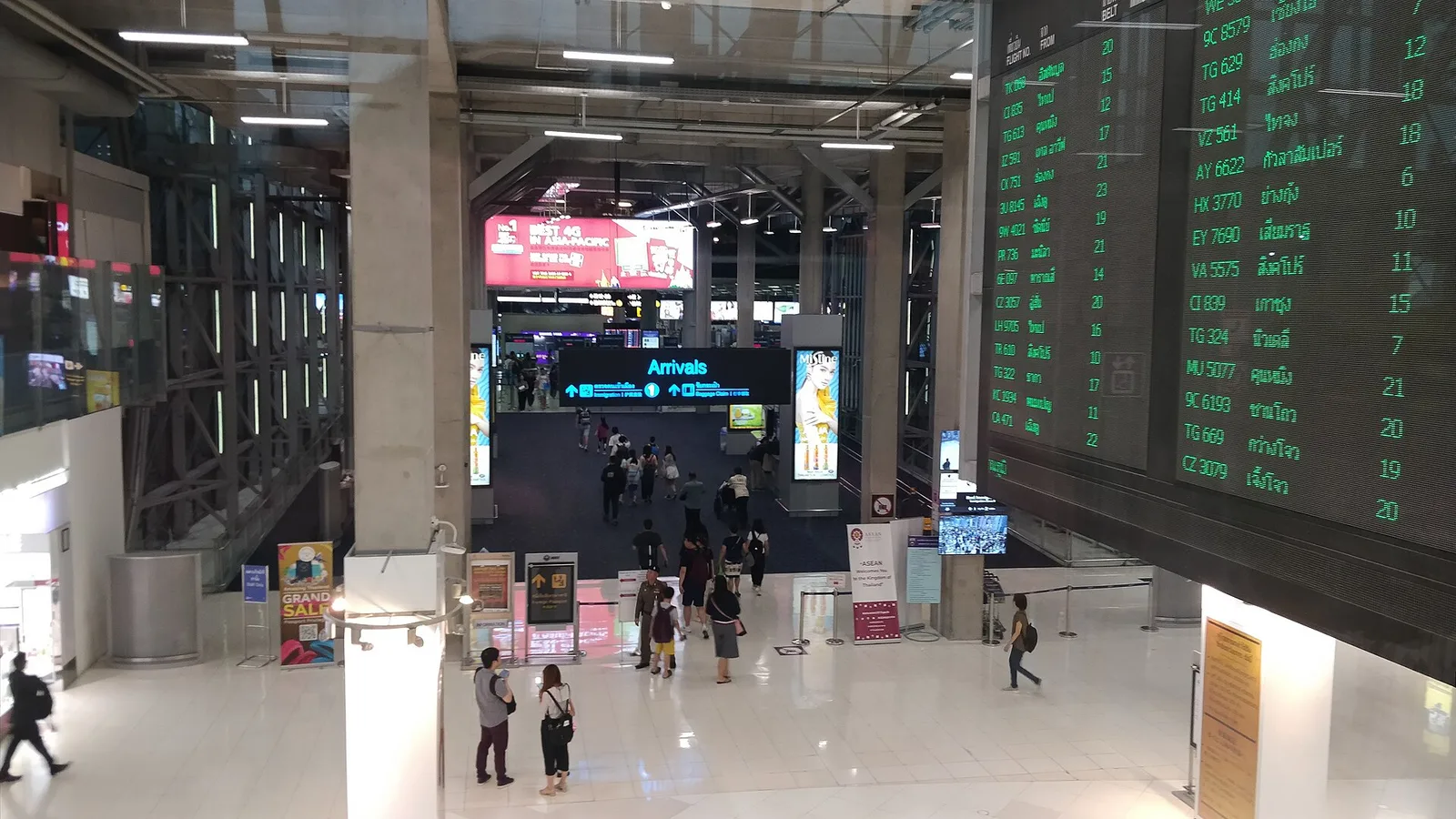
On Thursday 12 November 2026, immigration officers at Bangkok's Suvarnabhumi Airport refused entry to 92 arriving passengers in a single day. Forty-five of them were Chinese nationals and 47 held other passports. All 92 were put on return flights. The figures came out on 14 November, after one refused passenger posted videos on Chinese social media complaining about the airport holding room and claiming that a broker had offered "guaranteed" entry for 18,000 yuan (roughly 90,000 baht).
The Immigration Bureau has rejected both the discrimination claim and the bribe story, ordered an investigation, and made clear that tighter screening at airports will continue. Most travellers will never meet that screening. But if you are flying into Thailand on a visa exemption, it helps to know what officers are looking for and what to have ready.
Reviewed 16 November 2026. Based on the Immigration Bureau spokesman's statement of 14 November 2026 as reported by Thai and English-language press, and on current Ministry of Foreign Affairs and Royal Thai Embassy guidance.
What the Immigration Bureau said
Pol. Maj. Gen. Choengron Rimphadee, deputy commissioner and spokesman of the Immigration Bureau, gave the bureau's account on 14 November:
- 92 people were refused entry at Suvarnabhumi on 12 November, from all nationalities, including 45 Chinese nationals. All have been returned.
- The reason was risk screening. Officers are checking foreigners who arrive as tourists but cannot clearly confirm their travel plans, and people whose behaviour suggests links to scam networks trying to move operations into Thailand or to use the country to hide or launder money.
- The "detention room" is a short-term waiting area for people who have been refused entry, managed by the airlines rather than a police cell. People inside can use their phones. Passengers who can fly back the same day wait in a separate area that the airport built at the bureau's request to reduce crowding.
- The 18,000-yuan broker claim is unproven. Since screening was tightened, pages on Chinese platforms have advertised that they can "clear" Thai immigration for an upfront fee. The bureau had already warned travellers that these are scams. Anyone with real evidence is asked to submit it, and the bureau says it will prosecute if wrongdoing is found.
- No nationality is singled out. From 1 January 2026 to the date of the statement, 4,879,002 Chinese nationals entered Thailand and 12,880 were refused entry, about 0.26 per cent. The same standards apply to everyone.
The Commissioner of the Immigration Bureau, Pol. Lt. Gen. Nopphasil Phulsawat, ordered the commander of Immigration Division 2, Pol. Maj. Gen. Khathathon Khamthiang, to investigate the complaints immediately. The spokesman added that the National Police Chief has instructed all immigration checkpoints to tighten checks on foreigners who show risk indicators. The bureau's own summary: a smooth passage for honest travellers and a hard one for bad actors.
Why this matters for ordinary visitors
Thailand changed its visa-exemption rules on 15 September 2026. Nationals of 60 countries and territories now get up to 30 days visa-free for tourism, two countries get 15 days, and a few bilateral agreements still give longer stays. The new rules name tourism as the purpose of a visa-exempt stay, and visa-exempt entries over land borders are limited to two per calendar year for most nationalities.
None of that changes the basic principle: entry is decided by the immigration officer at the checkpoint. Royal Thai Embassy guidance states plainly that officers can ask for extra documents and can deny entry if a visit looks suspicious. Being eligible for a visa exemption does not guarantee you will be admitted.
The 12 November refusals show what officers are focusing on right now: travellers who say they are tourists but cannot explain where they are going, where they are staying, or how long they will be in Thailand.
What officers can ask you to show
Current Royal Thai Embassy guidance for the tourist visa-exemption scheme lists:
- a passport valid for at least six months;
- a return or onward air ticket;
- adequate funds of 20,000 baht per person or 40,000 baht per family, in cash or the equivalent.
A Tourism Authority of Thailand reminder notes that the funds amount depends on the entry category (10,000 baht per person for visa on arrival and some other cases, 20,000 baht for tourist and non-immigrant visas), that children under 12 are not included, and that you should check the latest guidance for your nationality. Officers rarely ask about money, but they can.
In practice, the questions officers ask most often are simple: How long are you staying? Where are you staying? What are you doing in Thailand? When are you leaving? Clear, consistent answers backed by documents on your phone or on paper resolve almost every case.
Checklist before you fly
- Check your entry status for your nationality on the Ministry of Foreign Affairs website or your nearest Royal Thai Embassy site. If your stay is not tourism, or is longer than your exemption allows, get the right visa before you travel.
- Complete the Thailand Digital Arrival Card (TDAC) online before arrival, with the same address and flight details you will tell the officer.
- Carry proof of onward travel: a confirmed return or onward ticket within your permitted stay.
- Have your accommodation confirmed, at least for the first nights, with the address visible in the booking.
- Keep proof of funds available: some cash plus a recent bank statement or card is sensible.
- Save everything offline as well as in email. If you are arranging a Thailand eSIM before landing, set it up at home so your booking confirmations open as soon as you switch your phone on, but keep screenshots in case the signal is slow in the arrivals hall.
- Be consistent. Your TDAC, your ticket, your booking and your answers should all tell the same story.
- Frequent visitors: if you have had several visa-exempt stays in a row, expect more questions. Officers may ask what you do in Thailand and how you support yourself. A long-stay visa that matches what you are actually doing is the safer route.
If you are refused entry
If an officer refuses entry, you will normally be held in the airport waiting area until the airline can fly you back. The bureau says people who can leave on a same-day flight wait in a separate area. Stay calm, ask for the reason, and contact your embassy if you need help.
Never pay anyone who claims they can "clear" immigration for you. The Immigration Bureau says such offers are scams, and paying an intermediary to influence an officer could expose you to criminal liability. If you are approached, keep the evidence and report it to the Immigration Bureau.
What happens next
The Division 2 investigation into the holding-room conditions and the broker claim is ongoing, and the bureau has not published individual reasons for each refusal or a full nationality breakdown. We will update this article if the investigation reports findings or if screening rules change formally.
Sources
- Immigration Bureau spokesman's statement of 14 November 2026, reported by MGR Online International: https://en.mgronline.com/politics/immigration-bureau-spokesman-fires-back-at-chinese-nationals-deportation-complai/
- Same statement in Thai, reported by INN News: https://www.innnews.co.th/news/news_1094475/
- Royal Thai Embassy, Brussels, visa exemption conditions (updated 10 November 2026): https://brussels.thaiembassy.org/en/page/visa-exemption
- Royal Thai Embassy, Doha, tourist visa exemption and visa on arrival (updated 16 September 2026): https://doha.thaiembassy.org/en/publicservice/tourist-visa-exemption-visa-on-arrival
- Thailand.go.th / TAT reminder on proof of funds: https://www.thailand.go.th/issue-focus-detail/thailand-entry-reminder-on-proof-of-funds-for-foreign-visitors
Editorial note: Foreigner's Thailand is an independent guide, not a visa agency or a government body. Entry decisions are made by Thai immigration officers. Confirm requirements for your nationality with the Immigration Bureau, the Ministry of Foreign Affairs or your nearest Royal Thai Embassy before you travel.
Image: "Bangkok Suvarnabhumi Airport - Arrivals - Immigration (for Wikimania 2020)", by Exec8, via Wikimedia Commons, licensed CC BY-SA 4.0.