Arsenic in the Sai River, which forms the border between Mae Sai in Chiang Rai and Tachileik in Myanmar, briefly knocked out tap water production for 14 villages in early November 2026. Supply has since resumed, but arsenic in the river is still above the national standard, health officials have renewed warnings about river water and fish, and Chiang Rai's tourism industry is now worried that alarming headlines will keep visitors away during the high season. If you live in Chiang Rai province or are planning a trip to Mae Sai, the Golden Triangle or the Kok River, here is what has been measured, what the official advice says and what it means in practice.
Last reviewed: 13 November 2026. Checked against Thai Department of Disease Control (DDC) releases of 8 October and 4 November 2026, the Chiang Rai Provincial Public Relations Office release of 4 November on Kok River fish, the Pollution Control Department figures reported by The Standard on 10 November, and reporting by The Nation, The Thaiger and the Bangkok Post.
At a glance
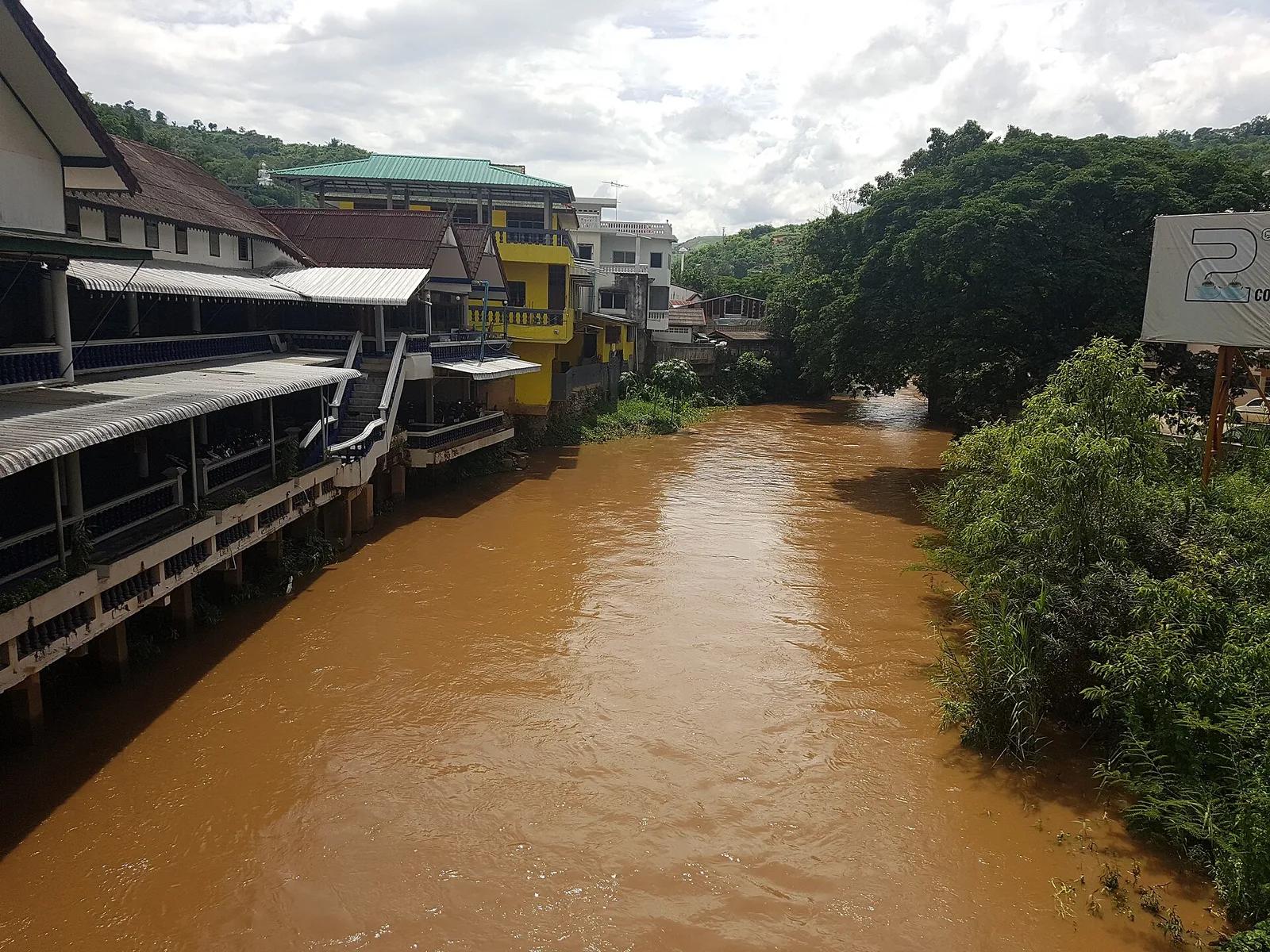
- What happened: on 5 November the Sai River at Hua Fai in Mae Sai turned red-brown and thick with mud. Turbidity reached 14,000 NTU, more than the Mae Sai waterworks can treat (about 6,000 NTU), and arsenic was found in the raw water. Production was suspended and supply to 14 villages in Mae Sai and Wiang Phang Kham subdistricts was cut.
- How high: a screening test at Ban Hua Fai on 6 November found 0.25 mg of arsenic per litre, about 25 times the surface-water standard of 0.01 mg/L.
- Now: by 7 November turbidity had dropped to 1,164 NTU and arsenic in the raw water to 0.05 mg/L. The Provincial Waterworks Authority (PWA) resumed normal production, but arsenic is still above the standard and monitoring continues.
- Still affected: about 60 households in the higher parts of Ban Pha Daek were still without tap water and being supplied by truck, according to a Bangkok Post report summarised by Thai Roundup on 10 November.
- Other rivers: September tests found the Kok, Ruak and Mekong rivers within the standard, the Pollution Control Department said.
- Official advice: do not drink, cook with or make ice from Sai River water, and avoid eating fish and other animals caught in it. Use standard bottled water or tap water checked by local authorities. DDC hotline: 1422.
- For tourists: the Chiang Rai Tourism Association says the water used by hotels and restaurants remains safe and attractions such as waterfalls and hot springs are operating normally.
What has been measured
The Sai River has been monitored for heavy metals since contamination first became an issue about two years ago, with mining upstream in Myanmar widely blamed. A Pollution Control Department official told reporters that monthly readings in the Sai peaked at 28 times the standard in early August 2026, then eased to an average of 0.012 to 0.017 mg/L, which is still above the limit. The department attributed the latest spike to rain washing chemicals from the upstream catchment into the river.
The early November episode was sharper. After the river turned cloudy on 5 November, the PWA cut supplies, and residents described cloudy, reddish tap water and itchy skin after using groundwater, according to The Nation. Chiang Rai's governor said on 6 November that supply had recovered to about 80 percent, and by 7 November, with turbidity and arsenic falling, normal production resumed. Samples from Ban Hua Fai, the Second Thai–Myanmar Friendship Bridge and Ban Pa Sang Ngam were sent for laboratory analysis. On 10 November the Minister of Natural Resources and Environment, Suchart Chomklin, ordered the Pollution Control Department to monitor the river closely.
What the health authorities advise
The DDC first warned residents of five Mae Sai subdistricts on 8 October: Mae Sai, Pong Pha, Si Mueang Chum, Wiang Phang Kham and Koh Chang. Its advice is:
- Do not drink water from the Sai River.
- Do not cook with it.
- Do not use it to make ice or drinks.
- Avoid catching and eating fish and other aquatic animals from the river.
- Follow announcements from the province and local agencies.
Safe alternatives, according to the DDC, are standard bottled drinking water, tap water whose quality has been checked by local agencies, and water from systems that are produced and tested to standard. Children, pregnant women, older people, people with chronic illnesses and people who work in the river should take extra care.
On 4 November the DDC said surveillance of people in at-risk areas along the Kok, Sai, Ruak, Salween and Mekong basins found arsenic in urine trending higher in 2026 than in 2025 in Chiang Rai and Chiang Mai. Experts who met on 29 October said the levels found were relatively low and not yet affecting health, but long-term monitoring is needed. The department asks people in these areas to watch for unusual symptoms, especially on the skin, and to see a doctor if they appear.
Fish from the Kok River
The Kok River flows through Chiang Rai city and is popular for boat trips. Results released by the Chiang Rai Provincial Public Relations Office on 4 November, from 259 samples collected across the Kok basin, found that fish flesh was almost entirely within the standard: 126 of 127 flesh samples passed. Fish guts were a different story. In Chiang Rai, 26 of 112 gut samples were over the limit for lead and 7 over the limit for arsenic. The advice:
- Eat only fish flesh, cooked thoroughly, for example steamed or grilled.
- Avoid raw fish dishes, including raw fish larb.
- Remove guts and innards before making chilli dips or fermented fish, even with small whole fish.
- Avoid freshwater snails (hoi khom) from Ban Sop Ruak, where arsenic was found above the limit.
What this means if you live in or visit Chiang Rai
For most of the province, daily life is unaffected. Hotels, restaurants and attractions are operating normally, and tourism officials stress that the water supply used by visitors is safe. The Tourism Authority of Thailand's Chiang Rai office says activities on the Kok River have continued as normal. The specific risks are untreated river water and wild-caught river fish and shellfish, mainly in Mae Sai district.
Practical steps:
- Drink bottled or treated water, as most visitors do anyway, and do not use river water for anything you will eat or drink.
- If you rent a house in Mae Sai, ask your landlord whether it is on PWA mains water or a private well or river supply. Report cloudy or discoloured tap water to the PWA Mae Sai branch and follow local announcements.
- At local restaurants, you can ask whether fish is farmed or river-caught. Residents along the Sai and Ruak rivers have switched to pond-farmed fish.
- Avoid swimming or wading in the Sai River, and follow DDC advice to avoid unnecessary contact with water from areas under surveillance.
- See a doctor if you develop unusual skin symptoms after using local water, and mention where you have been staying. The DDC hotline 1422 can also advise.
- If you plan to cross the border at Mae Sai, this is a water-safety issue, not a border closure, but check the current crossing arrangements before you go.
What the province is doing
Chiang Rai has announced a three-stage plan. In the short term, raw water is tested for arsenic and heavy metals before it enters the treatment system, production stops if turbidity exceeds 6,000 NTU, and backup water from a waterworks in Koh Chang subdistrict and five local-authority sources, plus water trucks and mobile treatment units, are on standby. In the medium term, the province plans to bring raw water from Chiang Saen district and develop groundwater and reserve tanks. Longer term, it plans new water sources such as a reservoir at Doi Hua Mae Kham, automatic water-quality stations on the Sai, Ruak and Kok rivers, and cooperation with Myanmar on cross-border pollution.
Checklist
- Do not drink, cook with or make ice from Sai River water.
- Use bottled or checked tap water.
- Skip river-caught fish guts and Ban Sop Ruak snails; eat only well-cooked fish flesh.
- Renting in Mae Sai? Confirm your water source with your landlord.
- Unusual skin symptoms? See a doctor; DDC hotline 1422.
- Follow Chiang Rai province and PWA announcements for updates.
Sources
- The Standard, 10 November 2026, Pollution Control Department figures and Chiang Rai's three-stage plan (in Thai): https://thestandard.co/mae-sai-river-arsenic-contamination-crisis/
- Department of Disease Control, 8 October 2026, warning to Mae Sai residents on Sai River water (in Thai): https://pr.moph.go.th/online/index/news/349049
- Department of Disease Control, 4 November 2026, arsenic surveillance in the Kok, Sai, Ruak, Salween and Mekong basins (in Thai): https://pr.moph.go.th/online/index/news/350195
- Chiang Rai Provincial Public Relations Office, 4 November 2026, Kok River fish test results (in Thai): https://chiangrai.prd.go.th/th/content/category/detail/id/9/iid/557438
- The Nation, 9 November 2026, "Arsenic contamination disrupts water supply to Chiang Rai villages": https://www.nationthailand.com/news/general/40073283
- The Thaiger, 7 November 2026, "Arsenic in Sai River cuts Mae Sai tap water to 14 villages": https://thethaiger.com/news/northern-thailand/arsenic-in-sai-river-cuts-mae-sai-tap-water-to-14-villages
- Thai Roundup, 10 November 2026, summary of Bangkok Post reporting on Mae Sai tap water: https://thairoundup.com/story/6825-arsenic-in-chiang-rai-s-sai-river-halts
- Bangkok Post, 12 November 2026, "Reports of river pollution hit Chiang Rai tourism prospects": https://www.bangkokpost.com/business/general/3353064/reports-of-river-pollution-hit-chiang-rai-tourism-prospects
Image: "Sai River, Chiang Rai - 2017-07-01", photographed in July 2017 by Iudexvivorum, via Wikimedia Commons, CC0 (public domain dedication). The photo is used for illustration and does not show the November 2026 conditions.
This article is general information, not medical or official advice. Water-quality readings and official advice can change. Follow announcements from Chiang Rai province, the PWA and the Department of Disease Control, and see a doctor about any health concerns. For questions about your own stay in Thailand, confirm with Thai Immigration or your embassy.