Thailand's Labour Ministry wants to make it easier for foreign speakers, trainers, performers and athletes to take part in short events in Thailand without a work permit. At a meeting on 6 November 2026, the Foreign Worker Management Policy Committee agreed to push for a Prime Minister's Office notification that would declare certain short-term activities by visiting foreigners not to be "work" under Thai law. The list covers organising or attending meetings, giving lectures and demonstrations, training, study visits, seminars, cultural performances and sports competitions. It is a proposal only. It still has to go to the Cabinet, and nothing has changed yet.
Last reviewed: 11 November 2026. Checked against the Labour Minister's statements after the committee meeting and a 7 November 2014 TCEB page recapping a MICE visa and work-permit meeting, with Thai and English-language press used for context.
At a glance
- What: a planned Prime Minister's Office notification listing activities that would not count as work for foreigners who come to Thailand occasionally for them.
- Activities named: organising or attending meetings, lectures, demonstrations at meetings, training, study visits and seminars, plus cultural and arts performances, sports competitions, and other activities the Cabinet may add.
- Who decided: the Foreign Worker Management Policy Committee, chaired by Labour Minister Julapun Amornvivat, on 6 November 2026. The minister set out the decisions on 6 and 9 November.
- Status: approved in principle by the committee. The Department of Employment says the committee's proposals will go to the Cabinet. No notification has been issued, and there is no start date.
- For now: the current rules still apply. If you will be paid, perform or provide a service at an event in Thailand, check whether you need a work permit or an urgent-work notification before you travel.
What the minister announced
After the meeting, Julapun said the ministry wants to raise Thailand's competitiveness and make the country a hub for international meetings and events. To do that, it will push for a Prime Minister's Office notification so that some activities are not treated as work under the law, for foreigners who enter Thailand occasionally to organise or attend meetings, lectures, demonstrations at meetings, training, study visits and seminars, as well as cultural performances, sports competitions and other activities the Cabinet specifies. The aim, he said, is to make things easier for visitors and to attract investment and tourism, which would bring income to Thai businesses.
The Director-General of the Department of Employment, Samas Pattamasukon, said the department would submit the committee's decisions to the Cabinet for approval.
What applies today
Thai law is strict about what counts as work. Even unpaid or short activities can count, which is why event organisers and visiting professionals often ask about it.
A TCEB page dated 7 November 2014 recaps a meeting with the Department of Employment, the Immigration Bureau and the Ministry of Foreign Affairs' consular department. It is a record of that 2014 meeting, not current official guidance. It cites the Alien Working Act B.E. 2551 (2008), which has since been superseded. That page said foreigners who come only to take part in trade and investment activities as participants are not treated as working and do not need a work permit or a work notification. The listed activities were:
- attending meetings, discussions or seminars;
- visiting exhibitions or trade shows;
- visiting a business or meeting for business negotiations;
- attending special or academic lectures;
- attending lectures at technical training courses or seminars;
- buying goods at a trade show.
The same 2014 TCEB recap said the position is different for a foreigner who comes as an employee of the organiser to make a meeting or seminar happen. That counted as work and needed a work permit. The exception then was necessary and urgent work of no more than 15 days, which instead needed a work notification on form WP.10 (Tor Tor 10), made before the work starts. Because this distinction comes from 2014 guidance under the old 2008 Act, it may no longer reflect current rules. Confirm the current position with the Department of Employment before you travel.
In practice, the grey area today is the active side of an event: the keynote speaker, the trainer running a workshop, the performer on stage, the athlete competing for prize money. The proposal names exactly these roles: lectures, demonstrations, training, performances and sports competitions.
What would change, and what would not
If the notification is issued as described, foreigners visiting Thailand occasionally to speak, train, demonstrate, perform or compete at an event could do so without a work permit for that activity. Until the text is published, several things are unknown:
- whether there will be a maximum length of stay or number of events;
- whether paid appearances are covered, or only unpaid ones;
- whether organisers must register events or visitors in advance;
- what "other activities as the Cabinet specifies" will include.
Some things are very unlikely to change:
- Visas are separate. A work-permit exemption is not a visa. You still need to enter on a visa or visa exemption that fits your purpose. Ask the Thai embassy or consulate handling your trip.
- Ordinary jobs are not affected. Regular employment with a Thai company still needs the right visa and a work permit.
- Remote work rules stay the same. The proposal is about short visits for events, not about working in Thailand long term.
Working without permission is a serious matter. Reports on the current law say foreigners can be fined 5,000 to 50,000 baht and removed from Thailand, and employers face fines of 10,000 to 100,000 baht per worker.
Other decisions at the same meeting
The committee also backed, in principle, measures that mainly affect migrant workers and their employers:
- extending work for more than 2.3 million workers whose permits expire on 13 February or 31 March 2027, so they can keep working until 13 February 2029;
- letting Cambodian, Lao and Myanmar workers without legal status stay temporarily and work for one year;
- an "MOU U-turn" letting Lao and Myanmar workers who complete four-year contracts between 1 January 2026 and 31 December 2027 continue working without the usual 30-day break;
- recruiting workers from Sri Lanka under the MOU system on Non-Immigrant L-A visas of two years, renewable for two more, expected from early 2027;
- easing work rules for people displaced by fighting in Myanmar.
These measures also need Cabinet approval and ministry notifications before anyone can apply.
Checklist for speakers, performers, athletes and organisers
- Are you only attending (meeting, seminar, trade show, lecture)? The 2014 TCEB recap treated that as not work — confirm with the Department of Employment.
- Are you speaking, training, performing or competing, or working for the organiser? Check now with the Department of Employment whether you need a work permit or an urgent-work notification. Do not wait for the new rule, and do not rely on the 2014 WP.10 description as current.
- Is your visa or visa exemption right for your purpose? Confirm with the Thai embassy or consulate.
- Organisers: keep a record of each foreign participant's role, dates and any payments.
- Watch for the Prime Minister's Office notification in the Royal Gazette before relying on the new exemption.
- Questions: Department of Employment hotline 1694.
Sources
- Pheu Thai Party, 6 November 2026, Labour Minister Julapun Amornvivat on the Foreign Worker Management Policy Committee results (in Thai): https://www.ptp.or.th/archives/57555
- Khaosod, 9 November 2026, the minister and the Department of Employment on proposals to go to the Cabinet (in Thai): https://www.khaosod.co.th/around-thailand/news_10465944
- Thailand Convention and Exhibition Bureau (TCEB), 7 November 2014, recap of a meeting on visa and work-permit requirements for MICE travellers, citing the Alien Working Act B.E. 2551 (2008) (in Thai): https://www.businesseventsthailand.com/th/newsmedia/tceb-hosts-a-meeting-on-visa-and-work-permit-requirement-for-mice-travelers/
- The Thaiger, 10 November 2026, "Thailand plans work permit extensions for 2.3 million migrant workers": https://thethaiger.com/news/national/thailand-ease-work-permit-rules-migrant-workers
- The Thaiger, 25 August 2026, "Can foreigners work in Thailand without a work permit?": https://thethaiger.com/news/business/work-thailand-without-work-permit-expat-guide
- Bangkok Post, 10 November 2026, "Migrant work permits set for extension": https://www.bangkokpost.com/thailand/general/3351789/migrant-work-permits-set-for-extension
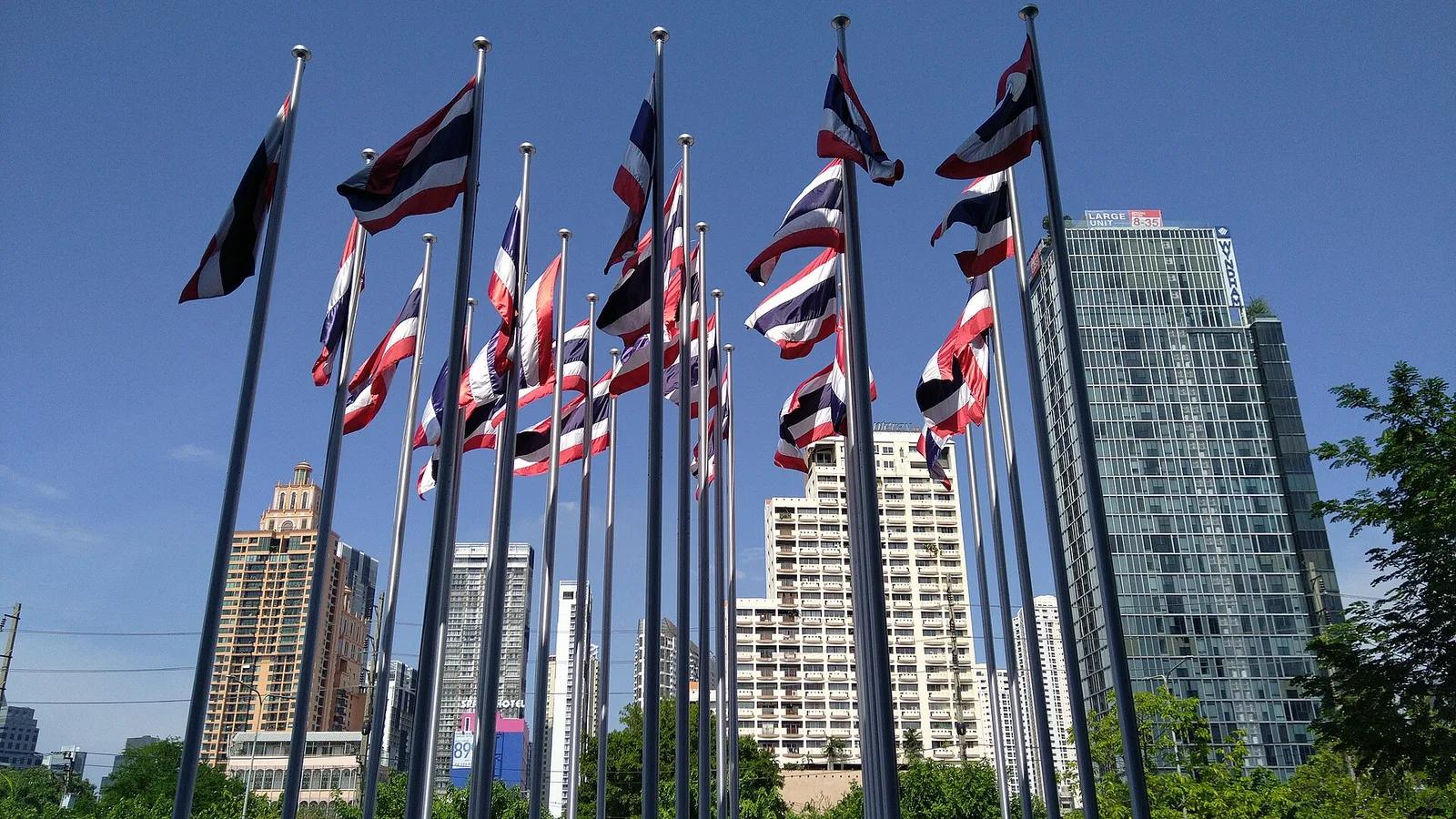
Image: "202307 Queen Sirikit National Convention Center 02" by Jonashtand, via Wikimedia Commons, licensed CC BY-SA 4.0 (https://creativecommons.org/licenses/by-sa/4.0).
This article is general information, not legal advice. The proposal described here is not yet law and its final terms may differ. Before working, speaking or performing in Thailand, confirm your position with the Department of Employment, and check your visa with Thai Immigration or the Thai embassy or consulate in your country.