Reviewed 24 November 2026
Bangkok's cool season has started, and with it the city's annual PM2.5 season. The cooler, calmer air that makes November mornings pleasant also tends to trap fine dust close to the ground. On 24 November 2026 the Bangkok Metropolitan Administration (BMA) said several districts were on watch for readings that could start to affect health between 23 and 25 November, and set out the measures it is taking for the 2027 fiscal year: a wider work-from-home network, more vehicles on its "Green List", stricter black-smoke checks and a possible ban on certain vehicles entering the city.
If you live in Bangkok, or are visiting with children, older relatives or a heart or lung condition, this is the time of year to build a simple habit: check the reading before you go out, and know what each colour means. This guide sets out what the authorities have said this week, how the colour bands work, and where to get readings and medical help.
This week's watch: which districts, which days
According to the BMA's Environment Department, as reported by the Government Public Relations Department (PRD) on 24 November, the highest 24-hour average PM2.5 reading on 23 November was 24.3 micrograms per cubic metre (µg/m³), in Nong Khaem district. That is still in the "good" band, but the BMA flagged three groups of districts where levels could rise and start to affect health from 23 to 25 November, especially on 23 and 24 November:
| District group | Districts named |
|---|---|
| Central Bangkok | Phaya Thai, Din Daeng, Huai Khwang |
| Thonburi North | Taling Chan, Bangkok Noi, Thawi Watthana |
| Thonburi South | Bang Khae, Nong Khaem, Bang Bon |
For the week of 23–29 November, the BMA expects the ventilation rate, a measure of how well the air mixes and carries dust away, to be at its lowest on 26 November, at about 1,362 square metres per second. It said that overall, PM2.5 levels were mostly expected to improve, and that it would keep monitoring closely.
The Pollution Control Department's seven-day outlook for 22–28 November, reported by Thai PBS's The Active on 21 November, gives a similar picture: moderate air across all six Bangkok district groups on 22 November; readings that may start to affect health on 23–25 November, with Thonburi North and Thonburi South the areas to watch; a return to moderate on 26 November; another dip into the "starting to affect health" range on 27 November, again on the Thonburi side; and moderate again on 28 November.
Forecasts like these change from day to day, so treat them as a reason to check, not as a fixed schedule.
Why November brings dust
In its 17 November advisory, reported by The Nation, the BMA explained that a strengthening cold air mass and weather that favours the build-up of fine particles near ground level combine with pollution from traffic, open burning, industry and road dust. When the atmosphere is poorly ventilated, pollutants cannot disperse and accumulate close to the surface. Thailand's cool season officially began on 9 November, according to the Thai Meteorological Department, and the TMD's latest seven-day outlook expects Bangkok to turn windier and 1–2°C cooler from 26 November.
What the colour bands mean, and what to do
The BMA uses five colour bands based on PM2.5 concentrations in µg/m³. Its advice, as published on 17 November:
| Colour | PM2.5 (µg/m³) | Level | BMA advice |
|---|---|---|---|
| Blue | 0–15 | Very good | Outdoor activities as normal. |
| Green | 15.1–25 | Good | Outdoor activities as normal; watch for unusual symptoms. |
| Yellow | 25.1–37.5 | Moderate | Cut time spent on strenuous outdoor activity. Vulnerable people should avoid outdoor activity and wear a PM2.5-filtering mask if they must go out. |
| Orange | 37.6–75 | Starting to affect health | Reduce strenuous outdoor activity and wear a PM2.5-filtering mask outside. Vulnerable people should avoid outdoor activity and follow their doctor's advice. |
| Red | Above 75 | Affecting health | Avoid outdoor activity and stay in a room protected from dust. Wear a PM2.5-filtering mask if you must go out, and seek medical help promptly if you develop coughing, breathing difficulty or chest tightness. |
The BMA singles out young children, older people, pregnant women and people with existing medical conditions, especially respiratory or heart disease, as groups that should watch readings closely and keep exposure low.
A practical point for newcomers: these bands refer to the PM2.5 concentration in µg/m³. If the app you use shows a different kind of index, look for the µg/m³ figure before you compare it with the BMA's advice.
Where to check readings
- AirBKK and Greener Bangkok: the BMA points residents to these for area-by-area PM2.5 readings.
- LINE Alert: add @linealert on LINE to receive notifications when pollution exceeds the standard.
- Your district: readings can differ sharply between districts on the same day, as this week's Thonburi-side warnings show, so check the station nearest where you live, work or exercise rather than a city-wide average.
Air pollution clinics run by the BMA
The BMA lists eight hospitals with air pollution clinics. Opening days, hours and phone numbers are published on Greener Bangkok's clinic page.
- Klang Hospital (Pom Prap Sattru Phai)
- Taksin Hospital (Khlong San)
- Charoenkrung Pracharak Hospital (Bang Kho Laem)
- Luang Pho Thaweesak Chutintharo Uthit Hospital (Nong Khaem)
- Vejkarun Rasmi Hospital (Nong Chok)
- Lat Krabang Hospital (Lat Krabang)
- Ratchaphiphat Hospital (Bang Khae)
- Sirindhorn Hospital (Prawet)
If you have health insurance, check with your insurer which hospitals are in its network before you need one.
What the BMA is doing for the 2027 season
The PRD report of 24 November lists five areas of work under the BMA's PM2.5 plan for the 2027 fiscal year:
- Work from home network. The BMA has asked 20 ministries and 127 private companies to register by 30 November 2026 to take part in work-from-home days, and is preparing a memorandum of understanding with the Ministry of Higher Education, Science, Research and Innovation.
- Green List. 10,761 vehicles had been registered on the Green List as of 08:30 on 23 November. The BMA is asking 115 public and private organisations to service their official and work vehicles and register them by 31 January 2027.
- Number-plate cameras. The BMA is checking 175 existing licence-plate recognition CCTV cameras and has proposed 22 new camera points to help enforce its Low Emission Zone.
- A possible entry ban on certain vehicles. A questionnaire is being prepared on the principle of a regulation, issued by Bangkok's chief traffic officer, that would bar specified vehicles from entering Bangkok under set conditions. The BMA said the outcome of that review is due by 30 November 2026. No ban has been announced yet.
- Farm burning. A meeting with Nakhon Nayok province on managing agricultural waste is planned for 29 November 2026, to reduce dust drifting into Bangkok.
The report also gives early enforcement results for the 2027 fiscal year. Roadside black-smoke checks with traffic police and the Department of Land Transport, including public buses, covered 978 vehicles: 793 passed (81.1%) and 185 failed (18.9%) and were ordered off the road until fixed. Of 11 construction sites spot-checked, 10 passed and one was ordered to fix its dust controls immediately.
Why it matters beyond a few hazy days
At a lung cancer forum at Chulalongkorn Hospital, reported by The Active, Assistant Professor Dr Piyada Sitthideatphaiboon said that while about 80–90% of lung cancer patients have a history of smoking, about 10–20% have never smoked, and research suggests that lung cancer in non-smokers may be linked to air pollution, especially PM2.5. She said Thailand's average annual PM2.5 level is about four times the standard, with Bangkok and the north particularly affected. She also stressed that exposure does not mean cancer will follow straight away; the concern is high or long-term exposure, especially combined with other risks such as smoking.
Checklist for the dust season
- Check AirBKK or Greener Bangkok for your district before a run, a cycle or a long walk, especially early in the morning.
- Add @linealert on LINE for alerts.
- Keep PM2.5-filtering masks at home and in your bag, as the BMA recommends from the yellow band up for vulnerable people.
- On orange days cut strenuous outdoor exercise; on red days avoid outdoor activity and stay in a room protected from dust.
- If you have asthma, a heart condition or are pregnant, follow your doctor's advice and keep your medicines to hand.
- Know your nearest air pollution clinic or insured hospital.
- If you drive in Bangkok, watch for news on the Low Emission Zone, the Green List and the possible vehicle-entry rule.
Sources
- Government Public Relations Department (PRD), "BMA on PM2.5 watch for three days, steps up 2027 measures: WFH network, Green List, black-smoke checks" (Thai), 24 November 2026: https://prd.go.th/main/article/3bff227a-94ef-4374-a71d-4bb47e63c685
- Thai PBS The Active, "Bangkok warned of PM2.5 affecting health on 23–25 Nov; Thonburi side on watch" (Thai), 21 November 2026: https://theactive.thaipbs.or.th/news/pollution-20261121
- The Nation, "Bangkok PM2.5 levels expected to rise on November 19–20; residents urged to check local air quality", 17 November 2026: https://www.nationthailand.com/news/general/40073598
- Thai Meteorological Department, seven-day outlook 24–30 November 2026: https://www.tmd.go.th/media/forecast/7-day/e_261124.pdf
Editorial note: Foreigner's Thailand is an independent guide, not a medical service. Air quality forecasts change daily; rely on live readings from AirBKK, Greener Bangkok or the Pollution Control Department, and ask a doctor about your own health risks. For questions about your visa or permitted stay, confirm with Thai Immigration or your embassy.
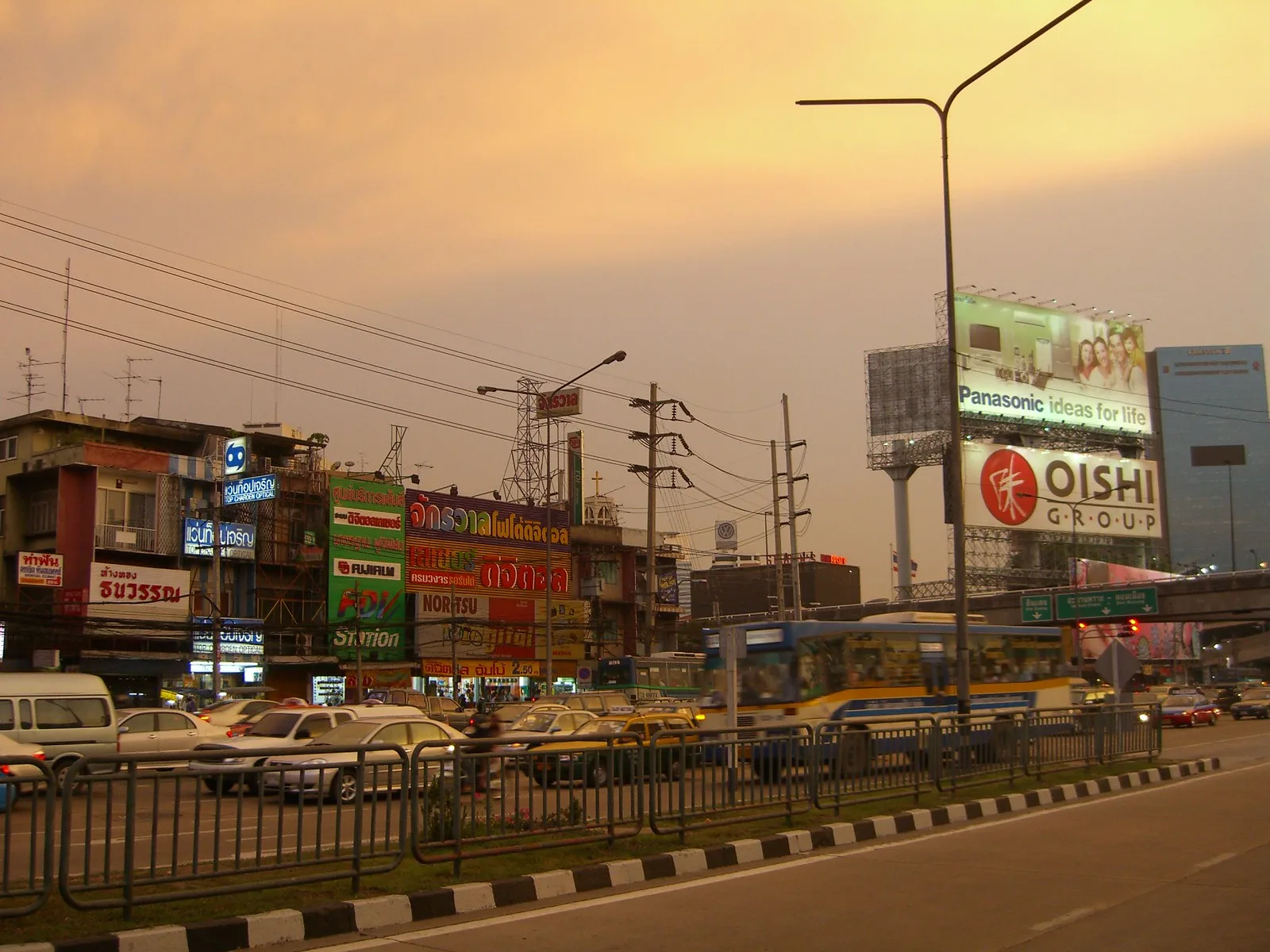
Image: "smog over Bangkok" by eric molina, via Flickr, licensed CC BY 2.0.